
NYC School Pedestrian Accidents: What Parents Should Know as Days Grow Shorter
Michele Mirman | Pedestrian Accidents | October 29, 2026
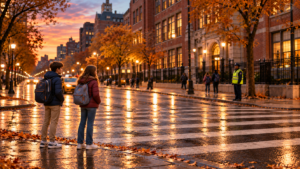
By October and November, the school routine feels familiar. Children know their teachers, parents have settled into drop-off schedules, and the walk between school and home has become part of everyday life. But the risk of NYC school pedestrian accidents remains a concern, especially as shorter days and changing weather make those familiar trips more challenging
But as the routine becomes more familiar, the conditions around it change.
The sun sets earlier. Rain can make streets harder to navigate. Children leaving an after-school program, sports practice, or a friend’s home may find themselves walking at dusk or after dark.
For a child crossing a New York City street, one distracted driver, one hurried turn, or one vehicle traveling too fast can change a life in seconds.
School pedestrian safety deserves attention throughout the year. In the fall, shorter days give families and drivers an especially important reason to reexamine their habits.
Earlier Sunsets Change the Trip Home
A route that felt easy to navigate in September can look very different on a dark November afternoon.
Children may cross the same intersections and pass the same driveways, but drivers have less daylight to see them. Students returning from after-school activities may also be walking during the evening commute, when streets are crowded with vehicles and people trying to get home.
New York City’s Department of Transportation highlights this seasonal danger through its annual Dusk and Darkness campaign, warning that reduced visibility during fall evenings heightens risks for pedestrians.
Drivers need to adjust before a close call occurs.
That means slowing down, giving yourself more time to spot people near the roadway, and checking carefully before every turn. A familiar commute is never a reason to stop looking.
School Traffic Remains a Concern Long After September
The first-day excitement may be over, but the congestion around schools continues. Preventing NYC school pedestrian accidents requires drivers to stay alert all year, even when arrival and dismissal routines feel predictable.
During arrival and dismissal, buses, delivery vehicles, parents, cyclists, and young pedestrians may converge within a few blocks. Cars pull over for pickup. Drivers search for parking. Children step out from behind vehicles or hurry to catch up with friends.
By October or November, familiarity can create its own problem: people begin to assume they know what will happen next.
A driver may expect the crosswalk to be empty because it usually is. A parent may make a hurried turn because they travel that route every morning. A student may assume an approaching driver will stop because other drivers have stopped there before.
Those assumptions leave little room for an unexpected movement.
Children do not always behave predictably. They may run because they are late, turn around after dropping something, or see a friend across the street and forget to check traffic.
Adults driving near schools must anticipate those possibilities every day.
Slow Down Before You See the Child
A parked SUV, delivery truck, or school bus can hide a small child from view.
By the time that child comes into view, a driver traveling too fast may have little time to react. Rain, darkness, and glare can make the situation more difficult.
Drivers should obey posted school-zone limits and reduce speed further when visibility or road conditions require it. The speed that feels comfortable on a clear afternoon may be inappropriate on a rainy evening.
Put the phone away. Leave room to stop. Look carefully around parked vehicles and near bus stops.
A child should never have to pay the price for an adult’s decision to save a few seconds.
Crosswalks Require Full Attention—Especially at Dusk
A green light does not mean a driver can turn without checking for pedestrians.
Before turning, drivers should scan the entire crosswalk and the sidewalk approaching it. A student may be entering from the far side of the street. A younger child may be walking beside an adult and be harder to see. Someone wearing dark clothing may blend into the background.
New York State’s pedestrian-safety guidance reminds people crossing streets to watch for turning vehicles and check every lane, even when one motorist has stopped. It also advises using well-lit crossing locations at night.
Drivers must do their part by approaching crossings cautiously and remaining prepared to stop.
Never assume another vehicle has stopped for no reason. It may be allowing a child to cross where you cannot see them.
School Buses and Pickup Areas Demand Patience
Few places require more patience than the blocks immediately surrounding a school.
Parents are trying to get to work or reach another child’s activity. Buses maneuver through tight streets. Vehicles stop unexpectedly. Children enter and exit cars.
Fall weather can make an already crowded pickup area feel even more rushed.
That is precisely when everyone needs to slow down.
Keep crosswalks clear. Avoid stopping where your vehicle blocks another driver’s view of children. Follow the school’s loading and pickup procedures, and allow children to enter or exit from the curb side whenever possible.
School-bus signals also demand attention. New York DMV explains that yellow flashing lights mean drivers should slow down and prepare to stop. When a stopped school bus displays flashing red lights, drivers approaching from either direction must stop—even on the opposite side of a divided highway—and remain stopped until the bus moves or the bus driver or a police officer signals them to proceed.
The inconvenience of waiting behind a school bus lasts moments.
The consequences of striking a child can last forever.
Revisit Your Child’s Walking Route for Fall
A route chosen at the beginning of the school year deserves another look as daylight becomes more limited.
Walk it with your child at the time they actually travel home. Pay attention to intersections, driveways, construction areas, and places where parked vehicles obstruct the view.
Consider whether an alternate route offers better lighting, clearer sightlines, or a crossing guard.
Parents can reinforce a few practical habits:
- Use sidewalks and cross at intersections or marked crosswalks.
- Follow pedestrian signals and look left, right, and left again before crossing.
- Watch for turning vehicles throughout the crossing.
- Put phones away and avoid distractions while crossing.
- Use reflective details on coats or backpacks to improve visibility in low light.
New York State recommends reflective materials for walking at night or in other low-light conditions, along with checking approaching traffic instead of assuming a vehicle will stop.
These conversations are worth repeating as schedules change. A child who usually comes home immediately after school may need a different plan on days with sports, tutoring, or other activities.
Teach Safe Habits Without Putting the Burden on Children
Parents should teach pedestrian safety and give children opportunities to practice it.
But safety advice should never suggest that children alone are responsible for preventing crashes.
A child making a mistake does not automatically excuse an adult driving carelessly. Drivers must remain alert to the presence of children and respond appropriately to the conditions around them.
Reflective clothing can help someone become more visible. It does not replace a driver’s responsibility to watch the road.
Teaching a child to check for turning vehicles provides another layer of protection. It does not excuse a motorist who turns without looking.
Families deserve streets where an ordinary walk home does not depend on every child making a perfect decision.
When a Child Is Struck, Families Deserve Answers
After a pedestrian accident involving a child, the first concern is medical care.
Then the questions begin.
Was the driver speeding or looking at a phone? Did the motorist fail to yield while turning? Did a parked vehicle obstruct visibility? Did the driver adjust to darkness or rain? Were proper school-bus loading and unloading procedures followed?
Understanding what happened can help a family identify potentially responsible parties and evaluate its legal options. When NYC school pedestrian accidents cause serious injuries, families deserve clear answers about how the crash occurred and what steps they can take to pursue compensation.
New York’s No-Fault insurance system generally provides coverage for certain medical expenses and other economic losses when a pedestrian is injured by a motor vehicle. Depending on the circumstances and injuries, additional claims may be available, including a claim for pain and suffering when the applicable serious-injury requirements are met.
Deadlines can arrive quickly. Written notice of a No-Fault claim generally must be submitted within 30 days of the accident, subject to a limited exception for a delay supported by clear and reasonable justification. Families should seek legal guidance promptly rather than assume they have unlimited time to act.
Every case is different. This article provides general information rather than legal advice.
Get a free, no obligation case review
get a free case reviewGetting Home Safely Matters in Every Season
By October and November, children should be thinking about homework, friends, school projects, and upcoming holidays.
Parents should be able to expect that a familiar walk home will end safely.
Protecting that expectation requires attention from drivers every morning, afternoon, and evening: slowing down, putting away the phone, checking the crosswalk again, waiting behind the school bus, and allowing a child another few seconds to cross.
As the days grow shorter, those decisions become even more important.
If your child or family member has been seriously injured in a pedestrian accident, call Mirman, Markovits & Landau, P.C. at 212-227-4000 or contact us online. We have been standing beside injured New Yorkers and their families for decades, and we are here when you need us.